
Ollama, Enchanted, Open Web UI, and Zed
Listening to the JS Party episode about Jerod Santo’s tool box motivated me to finally get Ollama working properly.
I had already played around with Ollama when I gave my friend Slava’s datachat a whirl. In that case, per the README, I spun up a Docker image and ran the following to pull the 4-5 GB model in:
docker exec -it ollama /bin/bash
ollama pull llama3
Then Slava’s app, which is pretty neat by the way, worked just fine.
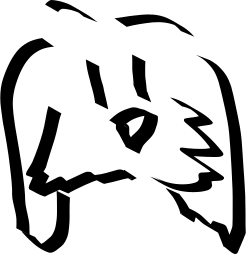
Midnight
Today I made a quick sketch of my dog, Midnight.
He’s a Shorkie, half Shih Tzu, half Yorkshire Terrier.
I was inspired by all the Inkscape content during the 20th anniversary celebration today. I joined session one early this morning and then caught up on videos by Martin Owens. In one, he explained a new template he created for making zines. Flip open my zine and you see my doggo.

Large Language Models and the End of Programming
I watched a video on YouTube called Large Language Models and the End of Programming by Matt Welsh, hosted by CS50. I considered attending the talk in person but didn’t make time for it. I’m glad it was recorded. It’s really good!
I first heard about Matt when he blogged about leaving Harvard back in 2010. It was nice to hear he’s doing well and right in the middle of the AI revolution that’s suddenly surrounding us all.
Social Translucence
The best paragraph in Social Translucence: An Approach to Designing Systems that Support Social Processes is the last:
From our perspective, the digital world appears to be populated by technologies that impose walls between people, rather than by technologies that create windows between them. We suggest that understanding how to design digital systems so that they mesh with human behavior at the individual and collective levels is of immense importance. By allowing users to “see” one another, to make inferences about the activities of others, to imitate one another, we believe that digital systems can become environments in which new social forms can be invented, adopted, adapted, and propagated— eventually supporting the same sort of social innovation and diversity that can be observed in physically based cultures.
Open source meetup in Brookline #3
The first two open source meetups in Brookline were a ton of fun. We had ten and then eleven people. Due to travel we’re skipping February, but we’re on for March:
- When: Sunday, March 26, 2023 at 5pm (Google Calendar)
- Where: Hamilton Restaurant & Bar (in the back room), 1366 Beacon Street Brookline, MA 02446 (Google Maps)
Come one, come all. If you’d like to RSVP (which certainly isn’t required!) or ask for the invite code to #boston in Quiet, please email philipdurbin@gmail.com.
New laptop! An M2 MacBook Air
I’ve been in the market for a new laptop for a long, long time. I bought my last laptop in 2011 and have run Linux on it, but I’ve been very disappointed with the hardware (a ThinkPad X220T). I had dreams of using the Wacom tablet built into the screen to make artwork, but it just didn’t work out, and it wasn’t cheap either. It was time for a change. Maybe every other laptop can be for Linux. Sorry, Linux, it’s not you, it was the hardware.
Creative Freedom Summit
Over the past few days, I binge listened to (and sometimes watched) all the videos from the Creative Freedom Summit that took place last week. I heard about it on the Sustain Open Source podcast.
The agenda was packed with interesting talks, but here are some of my favorites:
- Automation in Inkscape by Máirín Duffy
- Inkscape’s Multipage Feature by Martin Owens
- Creating Fedora Wallpapers with Krita by Madeline Peck
- Blender: Grease Pencil Speedpaint by Paul Caggegi
- Freelancing with Free Software by Ryan Gorley
- A quick painting demo using Krita by David Revoy
- Brand & Badges: How Fedora Designers Create with Inkscape by Marie Nordin and Jess Chitas
(I’ll update the links above as edited videos are available. I listened to the raw versions.)
Open source meetup in Brookline #2
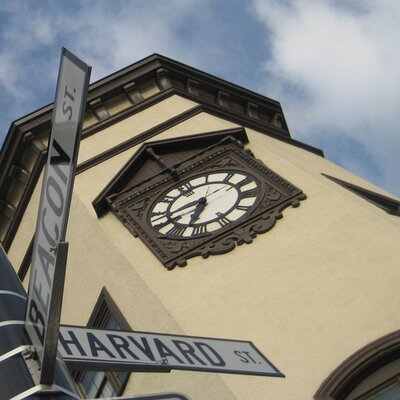
The first open source meetup in Brookline was a blast. Holmes and I were joined by eight other open source and decentralized web enthusiasts over drinks and dinner. We decided we’ll do it again at the same place:
- When: Sunday, January 22nd, 2023 at 5pm (Google Calendar)
- Where: Hamilton Restaurant & Bar (in the back room), 1366 Beacon Street Brookline, MA 02446 (Google Maps)
All are welcome, of course. If you’d like to RSVP (which certainly isn’t required!), please just drop me a note at philipdurbin@gmail.com.
Javascript application patterns
Today I listened to Syntax 548, titled “Rendering Methods Explained”, which covered a question in the State of JS survey that asks, “Which of the following architecture and rendering patterns have you used in the last year?”
The survey is ongoing but an issue and a localization file show the following options:
- Single Page Application (SPA): Apps that run entirely in the browser
- Multi-Page Application (MPA): Apps that run entirely on the server, with minimal client-side dynamic behavior
- Static Site Generation (SSG): Pre-rendered static content, with or without a client-side dynamic element
- Server-Side Rendering (SSR): Dynamically rendering HTML content on the server before rehydrating it on the client
- Partial Hydration: Only hydrating some of your components on the client (e.g. React Server Components)
- Progressive Hydration: Controlling the order of component hydration on the client
- Islands Architecture: Isolated islands of dynamic behavior with multiple entry points in an otherwise static site (Astro, Eleventy)
- Progressive Enhancement: Making sure an app is functional even without JavaScript
- Incremental Static Generation: Being able to dynamically augment or modify a static site even after the initial build (Next.js ISR, Gatsby DSG)
- Streaming SSR: Breaking down server-rendered content in smaller streamed chunks
- Resumability: Serializing framework state on the server so the client can resume execution with no duplicated code execution.
- Edge Rendering: Altering rendered HTML at the edge before sending it on to the client
Phew! Quite a list!
Open source meetup in Brookline
I’m co-organizing an open source meetup in Brookline about a week from now:
- When: Sunday, December 18th, 2022 at 5pm (Google Calendar)
- Where: Hamilton Restaurant & Bar, 1366 Beacon Street Brookline, MA 02446 (Google Maps)
Who’s coming? Well, the two co-organizers for sure. If you’d like to be added to the list below, please email me at philipdurbin@gmail.com.
- Philip Durbin (co-organizer), developer for Dataverse
- Holmes Wilson (co-organizer), creator of Quiet
- …
This will be a very casual event. If it’s just me and Holmes, we might just sit at the bar. If this time and location works well, we might make this a monthly event. All are welcome! See also the posts on Mastodon and Twitter by Holmes.